India is home to one of the richest butterfly populations in the world. With over 1,300 recorded butterfly species, the country is a hotspot of butterfly diversity. From the Himalayan valleys to the Western Ghats and from coastal forests to open grasslands, butterflies thrive in almost every ecosystem of India.
This complete guide covers 20 beautiful butterflies, their physical features, behavior, habitats, and identification tips — perfect for blogs, students, nature lovers, and photographers.

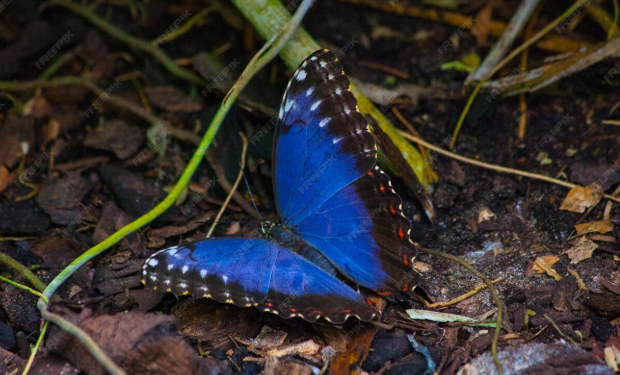
🌼 1. Blue Mormon (Papilio polymnestor)
The second largest butterfly in India.
Key Features:
India’s second-largest butterfly
Deep black wings with bright blue patches
Powerful and fast flyer
Habitat:
Western Ghats, Kerala, Maharashtra, Goa
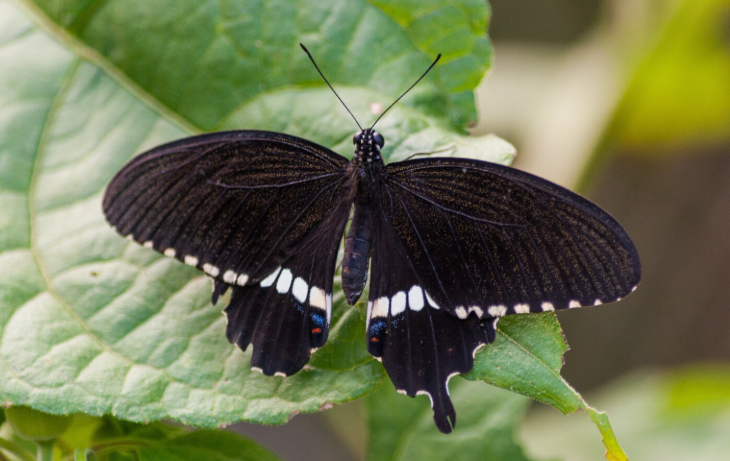
🌼 2. Common Mormon (Papilio polytes)
One of India’s most widespread swallowtail butterflies.
Features:
Black wings with white spots
Female mimics other species for protection
Very common in gardens
Range:
Throughout India
🌼 3. Common Tiger (Danaus genutia)
Also known as the “Striped Tiger.”
Features:
Orange wings with thick black lines
Member of Milkweed butterfly family
Slow and graceful flight
Range:
All over India, very common
🌼 4. Plain Tiger (Danaus chrysippus)
One of the most iconic butterflies in India.
Features:
Orange wings with large white spots
Produces toxins—predators avoid it
Easy to photograph
Range:
Nationwide
🌼 5. Common Jezebel (Delias eucharis)
Famous for its colorful appearance.
Features:
White wings with black veins
Bright red and yellow patches
Often seen near flowering plants
Region:
Plains, South India
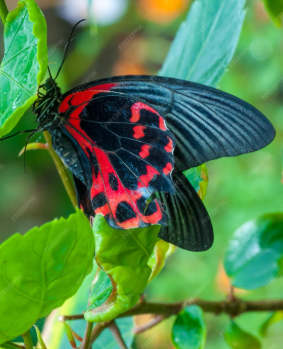
🌼 6. Crimson Rose (Pachliopta hector)
A migratory butterfly.
Features:
Black body with red abdomen
Migratory species
Toxic to predators
Range:
Western Ghats, Tamil Nadu, Karnataka
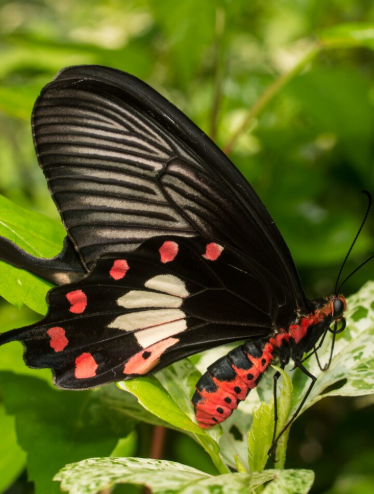
🌼 7. Common Rose (Pachliopta aristolochiae)
A beautiful swallowtail with warning coloration.
Features:
Black wings, red spots
Elegant slow flight
Often seen in monsoon season
Found In:
South & North-East India
🌼 8. Tailed Jay (Graphium agamemnon)
Features:
Green spots on black wings
Extremely fast flyer
Nectar-loving butterfly
Range:
India-wide but common in forests
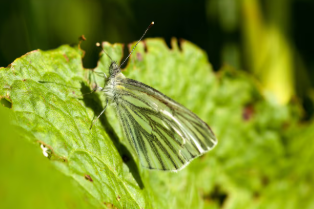
🌼 9. Indian Cabbage White (Pieris canidia)
Features:
Small white butterfly
Very fast moving
Common in farms & fields
Region:
North & Himalayan foothills
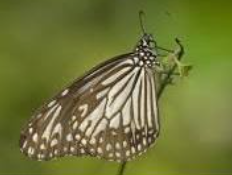
🌼 10. Glassy Tiger (Parantica aglea)
Features:
Semi-transparent bluish wings
Slow and steady flight
Calm behavior
Found In:
Southern India, NE India
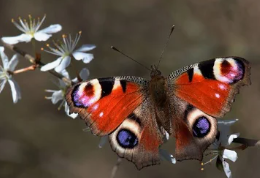
🌼 11. Peacock Butterfly (Aglais io)
Features:
Eyespot patterns on wings
Defensive threat-display
Large and colorful
Habitat:
Himalayan region
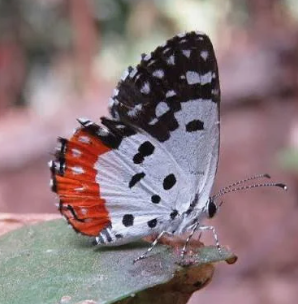
🌼 12. Red Pierrot (Talicada nyseus)
Features:
Black upper wings
Orange-underwing patterns
Small, delicate butterfly
Seen In:
South India, Deccan plateau
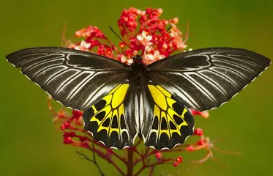
🌼 13. Southern Birdwing (Troides minos)
Features:
India’s largest butterfly
Yellow and black wingspan
Strong gliding flight
Range:
Western Ghats (endemic)
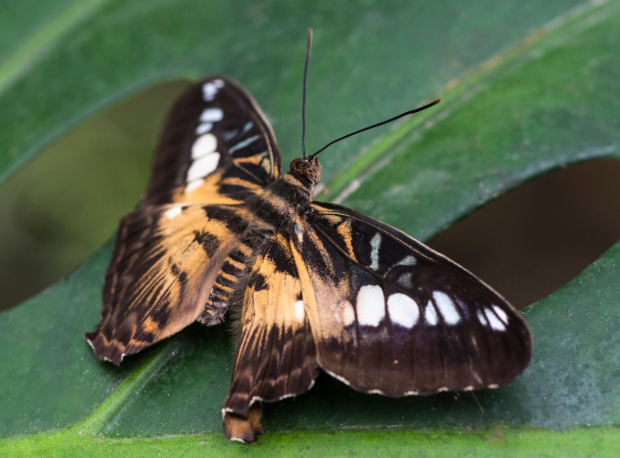
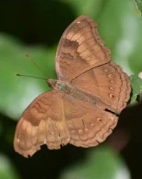
🌼 14. Chocolate Pansy (Junonia iphita)
Features:
Brown patterned wings
Very territorial
Ground-loving butterfly
Found In:
India-wide, especially gardens
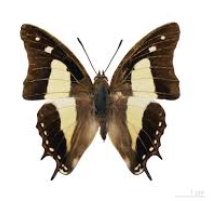
🌼 15. Indian Nawab (Polyura athamas)
Features:
Green wings with black & blue lines
Has elegant tails on hindwings
Location:
North-East India
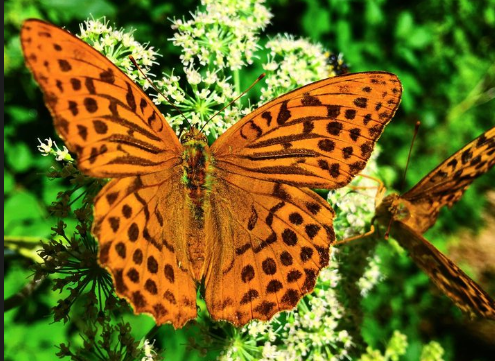
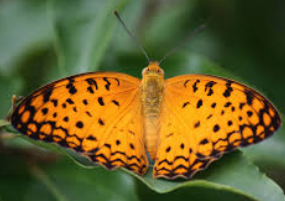
🌼 16. Common Leopard (Phalanta phalantha)
Features:
Orange butterfly with leopard-like spots
Active during hot afternoons
Found In:
All over India
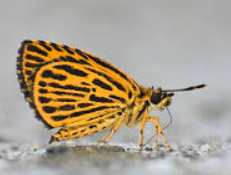
🌼 17. Tiger Hopper (Ochlandra tigerina)
Features:
Brown wings with tiger-like patterns
Rare species
Fast flier
Found In:
Western Ghats
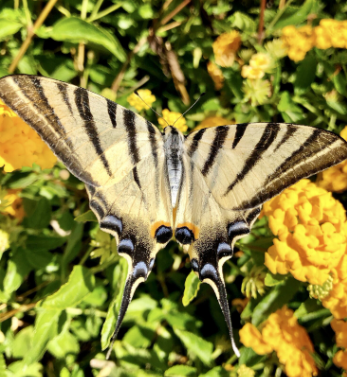
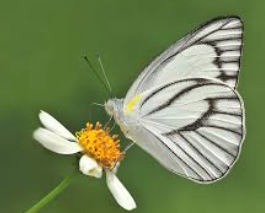
🌼 18. Striped Albatross (Appias libythea)
Features:
Pure white wings with black stripes
Very beautiful in flight
Habitat:
Eastern India, coastal zones
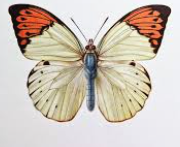
🌼 19. Great Orange Tip (Hebomoia glaucippe)
Features:
White wings with bright orange tips
Strong and gliding flier
Found In:
Himalayas & NE India
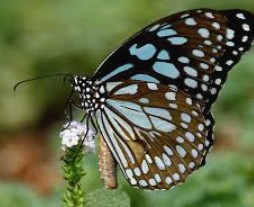
🌼 20. Indian Blue Tiger (Tirumala limniace)
Features:
Blue spots on black wings
Often migrates in large numbers
Seen In:
South India, forests & coasts
🦋 Conclusion
India’s butterfly diversity reflects the country’s rich ecosystems—from rainforests to mountains. These butterflies help in pollination, environmental balance, and act as indicators of healthy nature. Protecting forests, planting native plants, and reducing pollution can help conserve India’s beautiful butterflies.
🦋 Conservation Importance
Butterflies are important because they:
Help in pollination
Help maintain ecological balance
Indicate a healthy environment
Support food chains
Add beauty to nature
Threats include:
✔ habitat loss
✔ climate change
✔ pesticides
✔ pollution
We must conserve flowering plants, forest cover, and natural habitats.
🦋 FAQs (For Rank Math SEO)
1. How many butterfly species are found in India?
India has over 1,300+ species of butterflies.
2. Which is the largest butterfly in India?
The Southern Birdwing (Troides minos).
3. Which butterfly is most common in India?
Common Mormon, Common Tiger, and Plain Tiger.
4. Which region of India has maximum butterfly diversity?
The Western Ghats and North-East India.
5. Why are butterflies important?
They help in pollination, maintaining ecosystems, and indicating environmental health.